

Running a useful research study used to involve stitching together a long list of tools and people. Someone designed the questionnaire. Someone else handled fielding. Another team cleaned the data. Analysts ran the numbers. Strategists wrote up the conclusions. Each handoff added time, cost, and the risk of something getting lost in translation. A modern market research platform compresses this entire chain into a single AI market research workflow that one team can run end to end.
Insights Curry has helped many organizations build this kind of workflow, and the same backbone shows up every time. There are clear stages, each one powered by automation, and each one feeding cleanly into the next. The result is a research function that produces insights at the speed of business, not the speed of consulting. This article walks through every stage of an automated research workflow, from the moment a question is asked to the moment a decision is made.
Stage One: Defining the Question
Every good study starts with a clear question. What do we actually need to know, and what decision will the answer shape? This stage has not changed much in the move to AI market research automation, but its importance has grown. When fielding takes weeks, teams have time to refine their thinking as data trickles in. When fielding takes hours, the question has to be sharp before the study goes live.
Good practice is to write the decision first and the research question second. If the decision is whether to launch in a new city, the research question should be specific to that decision, not a broad survey of the market. Insights Curry typically runs a short scoping session at this stage to make sure the question is tight, the audience is defined, and the success criteria for the study are clear.

Stage Two: Designing the Study
Study design has been transformed by intelligent platforms. Drafting a questionnaire used to be a slow process of writing questions, getting feedback, rewriting, and testing. Modern tools assist at every step. They suggest question wording based on the research goal, flag leading or double barreled questions, and recommend the best format for each item. Whether you need a rating scale, an open ended probe, or a MaxDiff exercise to rank competing options, the system points you toward the right structure.
Conversational surveys are a major part of design today. Instead of a fixed list of questions, the survey can follow each respondent down their own path based on what they say. If a respondent gives a low score, the system asks why in plain language. If they mention a competitor, the system asks what that competitor does better. This adaptive design produces qualitative depth without losing quantitative discipline.
For pricing, positioning, and feature trade off studies, a MaxDiff platform is especially valuable. It asks respondents to repeatedly choose the most and least important options from small sets, and the math behind the scenes produces a clean ranking of preferences. This kind of exercise used to require specialist software and an analyst to set up. Today it can be added to a study in a few clicks.
Stage Three: Audience and Sampling
A study is only as good as the people who answer it. A modern AI market research platform connects to large, prescreened panels covering most countries, age groups, professions, and consumer categories. Teams can specify exactly who they want to hear from, and the system handles the recruiting. Quotas can be set so that the final sample matches the demographics that matter for the question at hand.
For business to business research, panels of verified professionals are available. For consumer research, broad panels can be filtered by category usage, brand loyalty, life stage, or any other relevant criterion. For internal research, the same platforms can field studies to employees or existing customers using your own contact lists.
Sampling controls catch the kind of low quality responses that used to slip through in traditional research. Speeders, straight liners, and bot like patterns are flagged automatically. Attention check questions confirm that respondents are actually reading. The clean sample that emerges is more reliable than what most traditional methods produced.
Stage Four: Data Collection
Once a study is live, data begins flowing within minutes. Respondents can answer on mobile, desktop, or tablet, and the experience adapts to each format. Conversational surveys feel like a chat, which keeps engagement high. Traditional formats are still available where they fit the question better.
Real time dashboards show responses as they come in. Researchers can watch completion rates, drop off points, and early trends without waiting for the study to close. If something looks off, like a confusing question that everyone is skipping, it can be fixed mid field rather than discovered after the fact. This responsiveness is something traditional research methods simply could not offer.
Most studies reach their full sample within a day or two. Larger or harder to reach studies might take a week. Either way, the timeline is a small fraction of what it used to be. Insights Curry regularly sees clients run a complete study faster than it would have taken to schedule the kickoff meeting for a traditional project.
Stage Five: Cleaning and Coding
Data cleaning is largely automated now. The platform removes obvious junk responses, harmonizes inconsistent inputs, and structures everything into a clean dataset. Open ended responses, which used to require manual coding, are processed by language models that identify themes, assign categories, and tag sentiment in seconds.
A good sentiment analysis tool is worth a special mention. Every comment gets a score showing whether the underlying feeling is positive, negative, or neutral, along with a measure of intensity. This lets researchers quantify the emotional shape of qualitative feedback. You can see at a glance whether the audience is mildly disappointed or actively angry, which changes how you respond.
Theme extraction surfaces the patterns that humans would miss. Across a thousand comments, the system identifies the dozen most discussed topics, shows how often each appears, and lets the analyst drill into any of them. The reading and tagging that used to consume days of analyst time happens in the background while the team focuses on interpretation. Pairing a robust sentiment analysis tool with theme extraction gives researchers both the emotional texture and the topical structure of open ended data in one pass.
Stage Six: Analysis
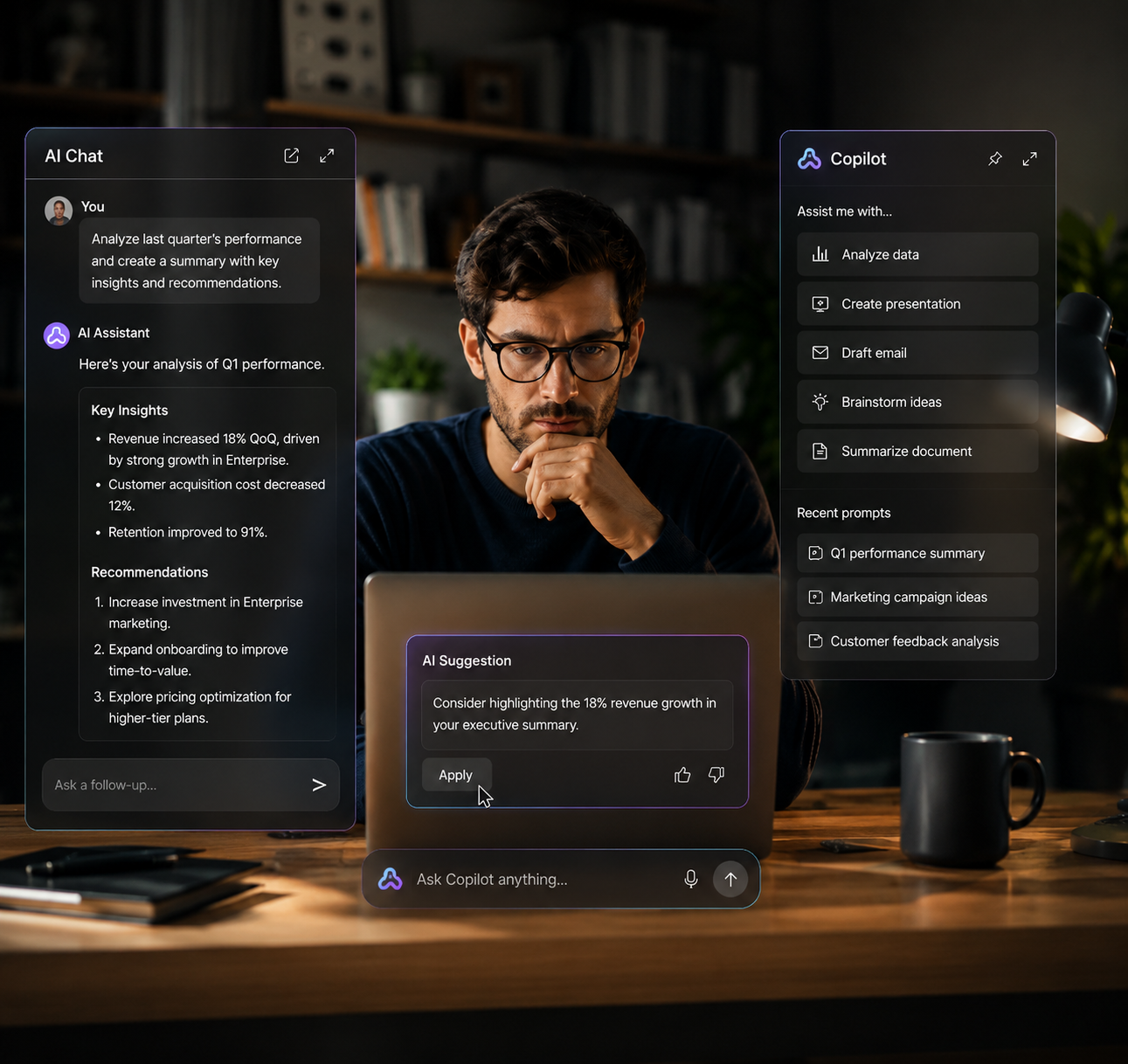
Analysis is where automated research platforms have made some of the biggest gains. Cross tabulations, significance testing, segment comparisons, and trend tracking are all built in to any capable market research platform. Researchers can slice the data by any variable in seconds. The system flags where differences between groups are statistically meaningful and where they are not, removing the risk of reading too much into noise.
Generative AI insights add a layer on top. They can write plain language summaries of what the data shows. They can compare two segments and explain in clear terms how they differ. They can answer ad hoc questions like, what are women in the thirty five to forty four bracket saying about delivery speed, and produce a draft response in seconds. The analyst still reviews and edits, but the starting point is much closer to the finish line.
Advanced techniques that used to require specialists, such as conjoint analysis, key driver analysis, and MaxDiff scoring, are available as standard features on modern platforms. A built-in sentiment analysis tool sits alongside these methods, so emotional tone is tracked with the same rigor as stated preferences. This pushes sophisticated analysis into reach for teams that never had access to it before.
Stage Seven: From Analysis to Insight
There is a difference between analysis and insight. Analysis tells you what the numbers show. Insight tells you what to do about it. This is still where human judgment matters most. The role of the researcher has shifted toward this final translation step, where data is converted into a recommendation that a decision maker can act on.
Good insight is specific, surprising, and actionable. It connects what the data shows to the business question that triggered the study. The platform can draft this, but a human typically adds the context, the strategic framing, and the recommendation. Insights Curry trains client teams on this final mile, because it is the part that turns good research into good decisions.
Stage Eight: Sharing the Findings
Reports are no longer the only deliverable. Live dashboards let stakeholders explore the data themselves, filter by segments they care about, and see how findings hold up across slices. Static decks are still produced for board level audiences who want a curated narrative, but the underlying data stays available for anyone who wants to dig deeper.
Many platforms now generate draft slides automatically. The system pulls the key charts, writes headline takeaways, and assembles a starter deck that the team can refine. This shaves further hours off the timeline between fielding closing and findings landing in front of decision makers.
Stage Nine: Acting on Findings
A study only matters if it changes a decision. The best research programs build clear handoffs from research findings to product, marketing, and strategy teams. Insights Curry helps clients establish these routines so that every study ends with a specific decision or action, tracked over time.
This is also where continuous research pays off. Once a workflow is in place, teams move from running occasional studies to maintaining a constant pulse on key questions. Brand health, customer satisfaction, pricing sensitivity, and competitive positioning can all be tracked on a rolling basis. The cost of adding a new tracker is small, and the value of always knowing where you stand is large.
Stage Ten: Learning Across Studies
Mature research programs treat individual studies as inputs into a larger knowledge base. Modern platforms make this practical by storing every study, every dataset, and every report in one place. Future questions can be answered partly by searching past research before fielding anything new. Patterns across studies become visible, which often reveals insights that no single study could surface.
Some platforms now apply generative models to this knowledge base, letting researchers ask questions in plain language and get answers drawn from years of past work. This compounds the value of every study you have ever run.
Putting the Workflow Together
Each stage on its own is useful. The real power comes when they connect into one seamless flow. A question gets defined in the morning. A study is designed by lunch. Fielding begins that afternoon. Results arrive overnight. Analysis and draft insights are ready the next day. The team reviews, refines, and acts within forty eight hours of asking the original question.
This is not theoretical. Insights Curry clients are running this loop today. The teams that have built a full automated research capability find that research becomes the fastest input into their decisions, not the slowest. That changes the role of research in the organization. It stops being a checkbox before launch and becomes a constant source of competitive advantage.
Common Pitfalls and How to Avoid Them
Even with great tools, teams can stumble. The most common pitfall is launching studies without a sharp question. Speed makes this easier to do, but it also makes the cost of vague studies higher because you can run so many of them. Discipline at the question stage pays off.
Another pitfall is over reliance on automation for interpretation. The platform can describe what the data shows. It cannot tell you what to do about it in your specific context. Teams that skip the human interpretation step end up with reports full of correctly summarized data and no clear next steps.
A third pitfall is ignoring sample quality in favor of sample size. A thousand responses from a poorly defined audience is worse than three hundred from the right one. Good platforms make targeting easy, but it still takes thought to define who you actually need to hear from.
Frequently Asked Questions
How long does a full workflow take?
With everything set up, a complete cycle from question to insight typically runs between one and four days for a standard study. Larger or more specialized studies take longer, but the order of magnitude is days, not weeks.
Do we need a dedicated research team?
Not necessarily. Many teams run this workflow with a product manager or marketer leading the work, supported by occasional input from a researcher. Insights Curry helps clients decide what level of in house capability makes sense for their volume and complexity of research needs.
Can we integrate this with our existing tools?
Yes. A modern market research platform connects with CRM systems, analytics tools, and collaboration platforms. Findings can be pushed into the systems your team already uses for product, marketing, and strategy work.
How do we handle sensitive or regulated research?
Reputable platforms support the privacy, consent, and data residency requirements that apply in different regions. For regulated industries, additional controls can be configured. Insights Curry walks clients through these considerations during setup.
What kinds of studies work best in this workflow?
Brand and product trackers, concept tests, pricing studies, customer satisfaction work, employee research, and competitive intelligence all fit naturally. The workflow handles most quantitative and lightweight qualitative work very well. Deeply ethnographic or in person studies still benefit from traditional research methods alongside the automated workflow.
Bringing It All Together
The shift from artisan research projects to continuous, automated research workflows is one of the most consequential changes in how businesses understand their customers. Each stage of the workflow has been improved by intelligent platforms, and the connections between stages have been streamlined so that handoffs no longer slow things down. The result is a research function that keeps pace with the business and helps every team make better decisions, faster.
Insights Curry partners with organizations to design, deploy, and operate these workflows so that the value shows up not just in faster studies but in better decisions across the company. The technical setup is the start. The lasting change comes from how teams use what the workflow produces.
Ready to Build Your Own Workflow?
If your next big decision was sitting in the heads of your customers right now, how quickly could you actually find it?
What would your team be able to test, learn, and ship next quarter if running a study was as easy as sending an email?
Speak with Insights Curry to map out what an end to end AI market research automation workflow could look like for your organization.