

Artificial intelligence is no longer something we talk about in the future tense. It is already in the tools we use at work, in the way customer queries are handled, in how candidates are screened, and in the systems that decide what shows up on our screens every day. The question that matters now is not whether AI will reshape jobs but how much, how fast, and in what direction by the time we reach 2030.
For every business leader, employee, student, and policy maker, this is a moment that calls for a clear picture rather than headlines. The conversation about the impact of AI on jobs has often swung between two extremes. On one side is the fear that machines will quietly take over and leave millions without work. On the other is the optimism that AI will simply boost productivity and create entirely new roles to replace anything it displaces. The truth sits somewhere between, and that middle ground is where the most interesting changes are happening.
This blog walks through what is realistically expected to change by 2030, where the disruption will be sharpest, which roles are likely to grow, and what individuals and organisations can do now to stay relevant.
The Scale of AI Impact on Employment Coming by 2030
Multiple global studies, including those from the World Economic Forum and McKinsey, suggest that between 30 and 40 percent of work activities across industries could be meaningfully affected by AI within this decade. Note the careful word activities. It is rarely an entire job that disappears. It is the tasks inside the job that get reshaped, automated, or accelerated, which then changes what the role looks like from the outside.
By 2030, the AI impact on employment will likely show up in three broad patterns. Some roles will shrink as their core tasks become automatable. Some roles will transform, meaning the title stays the same but the day to day work moves higher up the value chain. And some roles will emerge that did not meaningfully exist before, built around designing, training, governing, and integrating AI systems.
Roles That Will Shrink the Most Due to the Impact of AI on Jobs
Routine, rules based, and pattern driven work is the most exposed. Where the task is predictable, repeats often, and produces a clear output, AI tends to do it faster and at lower cost. Some of the categories most likely to contract include:
- Basic data entry and document processing roles, where AI can extract, classify, and route information without human handling.
- First line customer support for simple queries, increasingly handled by AI assistants that can pull from product manuals, account histories, and policy documents in real time.
- Routine accounting and bookkeeping tasks such as invoice matching, expense categorisation, and basic reconciliations.
- Standardised content production, including templated reports, basic translations, and first draft marketing copy.
- Telemarketing and outbound cold outreach in its current scripted form.
This does not mean these jobs vanish overnight. It means the share of human time spent on them shrinks, and the people doing them will need to move into adjacent work that involves judgment, exceptions, and relationships.
Roles That Will Transform as AI and Jobs Evolve Together
A much larger group of jobs will not disappear but will change in character. This is where the impact of AI on jobs is most underestimated, because the title on the business card looks the same but the work itself looks very different.
- Software engineers will spend less time writing boilerplate and more time on architecture, review, and integration.
- Doctors and radiologists will rely on AI for first pass analysis and spend more time on complex diagnosis, patient communication, and treatment planning.
- Lawyers will shift away from manual contract review toward strategy, negotiation, and client advisory work.
- Teachers will use AI for personalised practice and assessment and spend more time on mentoring, motivation, and project based learning.
- Marketers will move from producing assets to orchestrating systems that generate, test, and optimise content at scale.
- HR professionals will lean on AI for screening and scheduling and spend more time on culture, coaching, and workforce design.
In each of these cases, the human role becomes more strategic, more interpretive, and more relational. The repetitive part of the job leaves first.
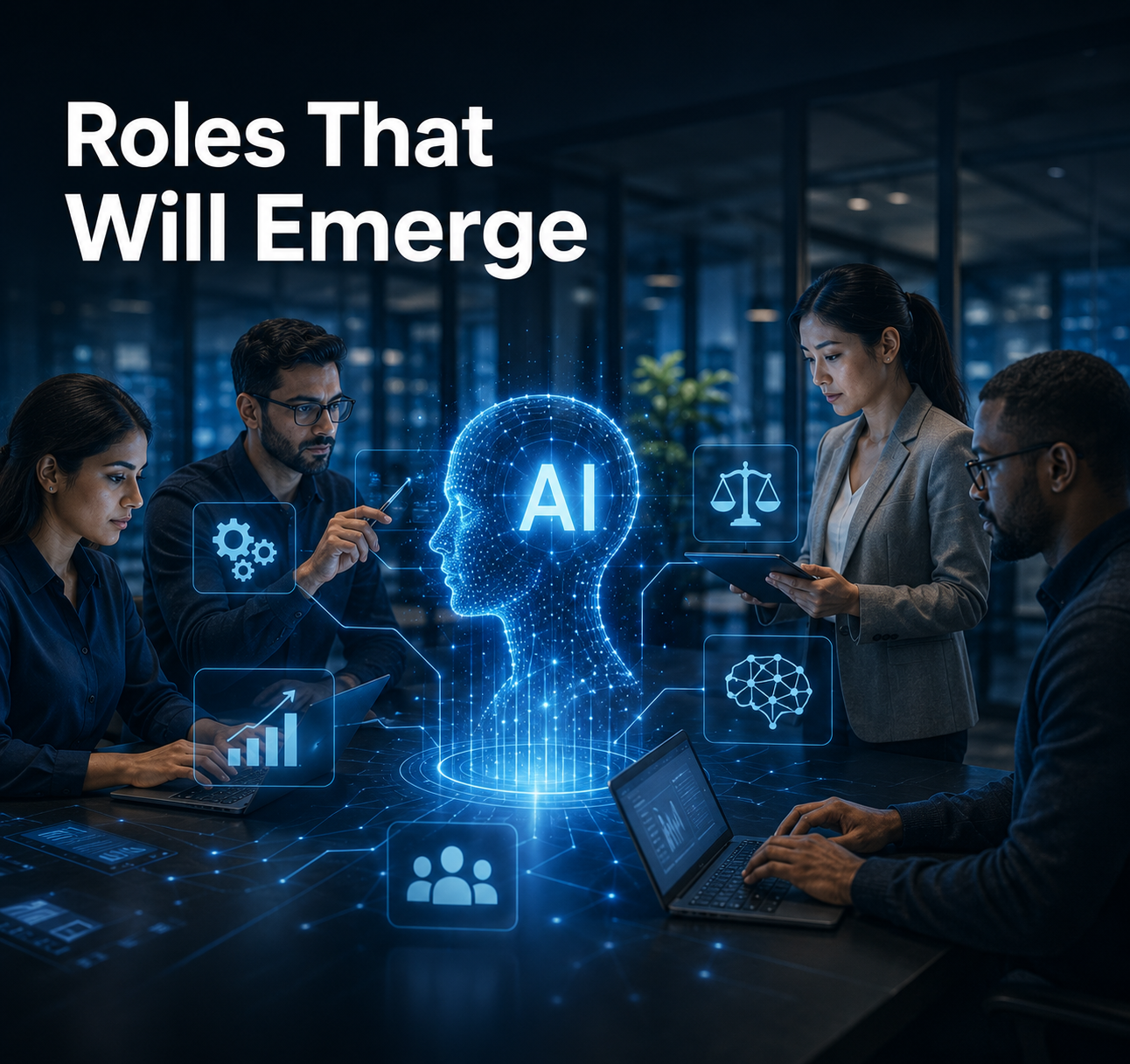
New AI and Jobs Roles That Will Emerge by 2030
Every major wave of automation has created jobs that did not exist before, and AI is no different. By 2030, expect to see meaningful demand for:
- AI integration specialists who plug AI into existing business systems and workflows.
- Prompt engineers and AI workflow designers who shape how AI assistants behave inside an organisation.
- AI governance, risk, and compliance roles focused on safe and lawful deployment.
- Model trainers and data curators who improve domain specific AI quality.
- Human in the loop reviewers in sensitive areas such as healthcare, finance, and legal.
- AI ethics and policy advisors helping organisations balance innovation with responsibility.
Many of these roles will pay well, hire across geographies, and reward people who combine domain knowledge with comfort using AI tools.
Industries Facing the Biggest AI Impact on Employment Shift
Some industries will feel the AI impact on employment more sharply than others, simply because their core work is information heavy.
- Financial services, where research, underwriting, fraud detection, and reporting are heavy candidates for AI augmentation.
- Healthcare, where diagnostics, documentation, and administrative load are being reduced through AI assisted tools.
- Retail and ecommerce, where personalisation, demand forecasting, and customer service are being rebuilt around AI.
- Media and entertainment, where production, editing, and distribution workflows are increasingly AI assisted.
- Education, where learning paths, assessment, and tutoring are becoming more adaptive.
- Manufacturing and logistics, where AI driven planning, predictive maintenance, and quality control reshape the floor.
In each of these sectors, the organisations that adapt earliest will likely operate with leaner teams doing higher value work. The organisations that wait will find themselves trying to retrofit AI into legacy processes under pressure.
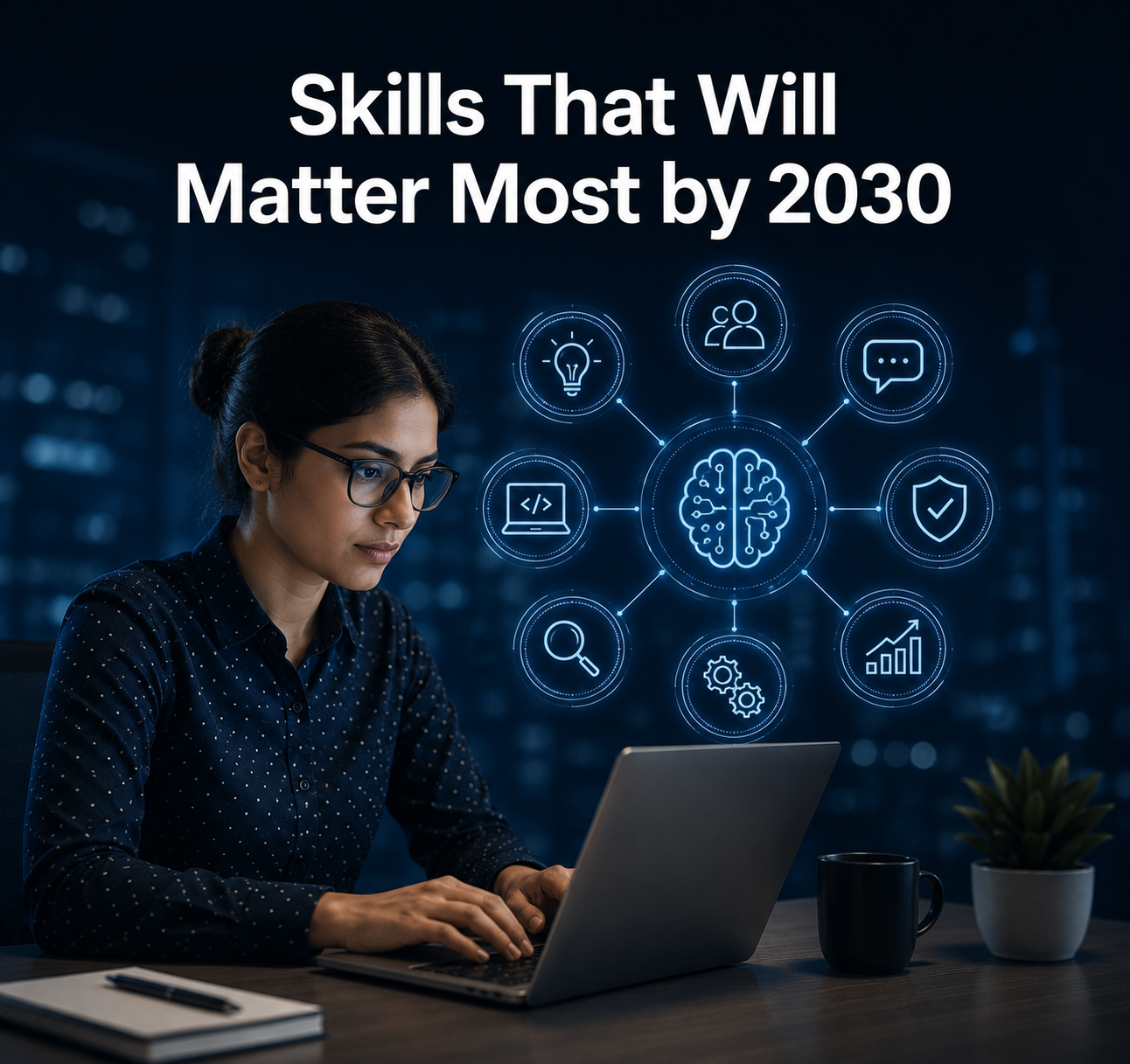
Skills That Will Matter Most as AI and Jobs Continue to Evolve by 2030
If you ask what kind of person stays valuable in this shift, the answer is consistent across studies. It is not a specific tool or coding language. It is a combination of human strengths and the ability to work alongside AI thoughtfully.
- Critical thinking and judgment, especially in ambiguous situations where AI confidence does not equal correctness.
- Domain expertise, because the best AI users are people who deeply understand the problem AI is solving.
- Communication and storytelling, since AI lowers the cost of producing content but raises the value of clear, persuasive thinking.
- Comfort with data, including reading, questioning, and acting on it.
- Adaptability and learning agility, given that the tools themselves will keep changing.
- Emotional intelligence and collaboration, which AI does not replicate and which becomes more important in flatter, AI assisted teams.
The single most useful habit anyone can build right now is to use AI tools regularly in their own work. People who use AI well are not replaced by AI. They are the ones doing more with it than their peers.
What Organisations Should Be Doing Now to Navigate the Impact of AI on Jobs
Companies that take AI seriously are not waiting for 2030. They are building three things in parallel.
- A clear inventory of which workflows AI can realistically improve in the next 12 to 18 months.
- Internal AI literacy across teams, not just inside engineering, so that adoption is grounded and not theatrical.
- Reskilling and redeployment pathways, so that as some tasks shrink, people can move into the roles being created instead of out of the door.
The most resilient organisations will treat AI as an operating model question, not a tools question. They will redesign processes around what AI can now do, rather than bolting AI on top of how things used to be done.
The Human Story Inside the AI Impact on Employment Numbers
Behind every percentage and forecast is a real person whose work is changing. Some will adapt with excitement, others with anxiety. Both are valid responses. The honest message is that AI will not flatten everyone equally. Those who lean in, learn the new tools, and stay curious will find more leverage in their careers than they have ever had. Those who treat AI as someone else's problem will find their options narrowing quietly.
The good news is that 2030 is not far, but it is also not tomorrow. There is genuine time to learn, to experiment, and to position yourself or your team for the new shape of work. The shift is significant, but it is also navigable.
FAQs
Will AI take away most jobs by 2030?
No. The more accurate expectation is that AI will reshape a large share of work activities rather than eliminate entire jobs at scale. Some roles will shrink, many will transform, and new ones will emerge.
Which jobs are most at risk from the impact of AI on jobs?
Roles built around routine, predictable, rules based tasks are most exposed. This includes basic data entry, simple customer support, routine bookkeeping, and templated content production.
Which AI and jobs roles are likely to grow?
Roles that involve judgment, creativity, complex problem solving, relationships, and work that integrates or governs AI systems are expected to grow. AI integration, governance, ethics, and human in the loop roles are clear examples.
What skills should I focus on now given the impact of AI on jobs?
Build critical thinking, domain expertise, communication, comfort with data, and the habit of using AI tools regularly. These travel well across industries and roles.
How should companies prepare for the AI impact on employment?
Identify the workflows AI can improve in the near term, build AI literacy across the organisation, and create reskilling pathways so employees can move into emerging roles rather than out of work.
Is the AI impact on employment the same across countries?
No. The pace and shape of change will vary based on the structure of the economy, the maturity of digital infrastructure, regulation, and the readiness of the workforce. Knowledge heavy economies will see faster transformation.
Curious how AI will reshape the roles inside your own organisation by 2030?
Wondering which skills your team should build first to stay ahead of the curve?